Autonomous frameworks
How can an agent plan, use tools and coordinate work while keeping its actions observable and its permissions explicit?
Planning · Orchestration · Evaluation OPUSSI LAB
The laboratory / People & purpose
What would Super Intelligence need to carry its work forward? We explore the frameworks, memory and infrastructure behind autonomous systems.
Inside OPUSA capable model is one part of a larger system. The questions that interest us sit between its decisions: what it remembers, how it acts and what keeps its work connected.
OPUS SI Laboratory explores the foundations of Super Intelligence through autonomous frameworks and LLM memory systems. Our focus is how these layers can work together across tasks, sessions and environments.
How can an agent plan, use tools and coordinate work while keeping its actions observable and its permissions explicit?
Planning · Orchestration · EvaluationHow should a system retain useful context, retrieve what matters and revise what it believes as new evidence arrives?
Context · Retrieval · RevisionHow do models, memory and compute become a coherent system that can be inspected, measured and improved?
Runtimes · Compute · ObservabilityResearch is a collective practice: asking precise questions, challenging assumptions and making ideas testable.
OPUS / RESEARCH COLLECTIVEModels. Memory. Agency.
One connected research direction.
Our starting point is a question: how can an autonomous system carry useful context and coherent intent from one task to the next?
We approach memory, agent frameworks and infrastructure as connected parts of the same problem. Each research direction informs the others.
Our aim is to make decisions, permissions and system boundaries clear enough to question, evaluate and improve.
Our virtual laboratory gives each research theme a place. These rooms are visual metaphors for the work we want to explore.
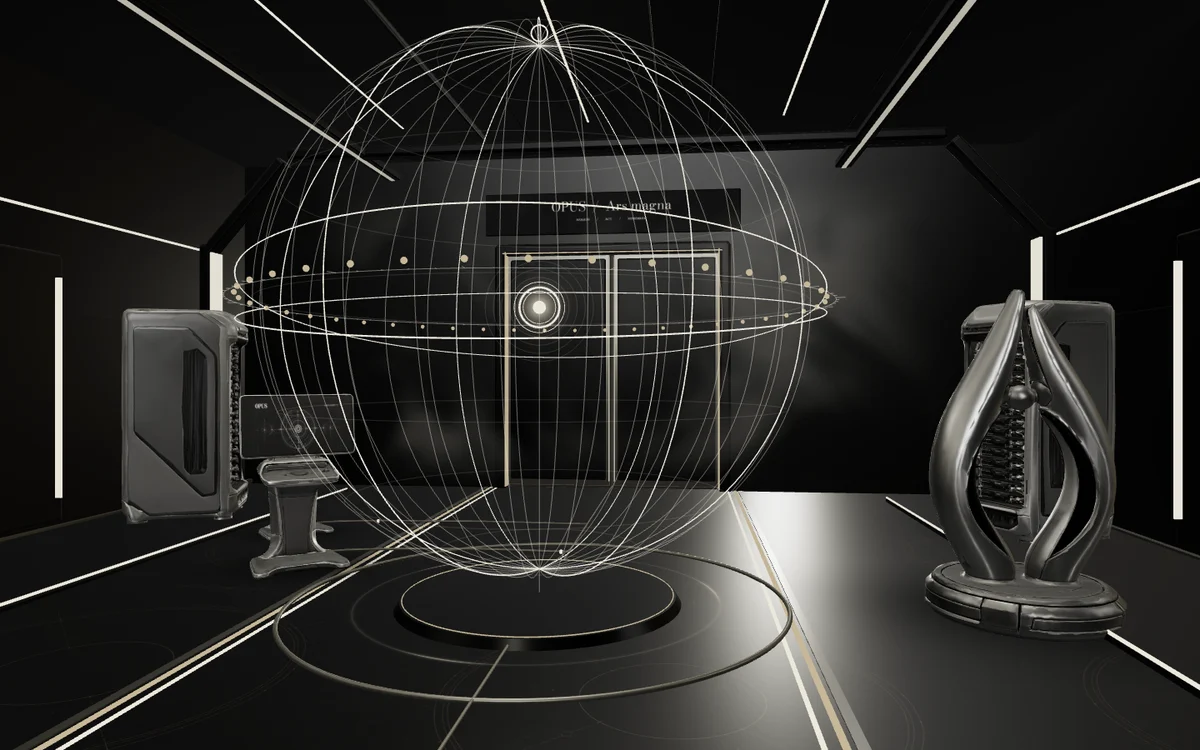
01 / The laboratory
The point of connection. A shared instrument brings models, memory and tools into the same frame.
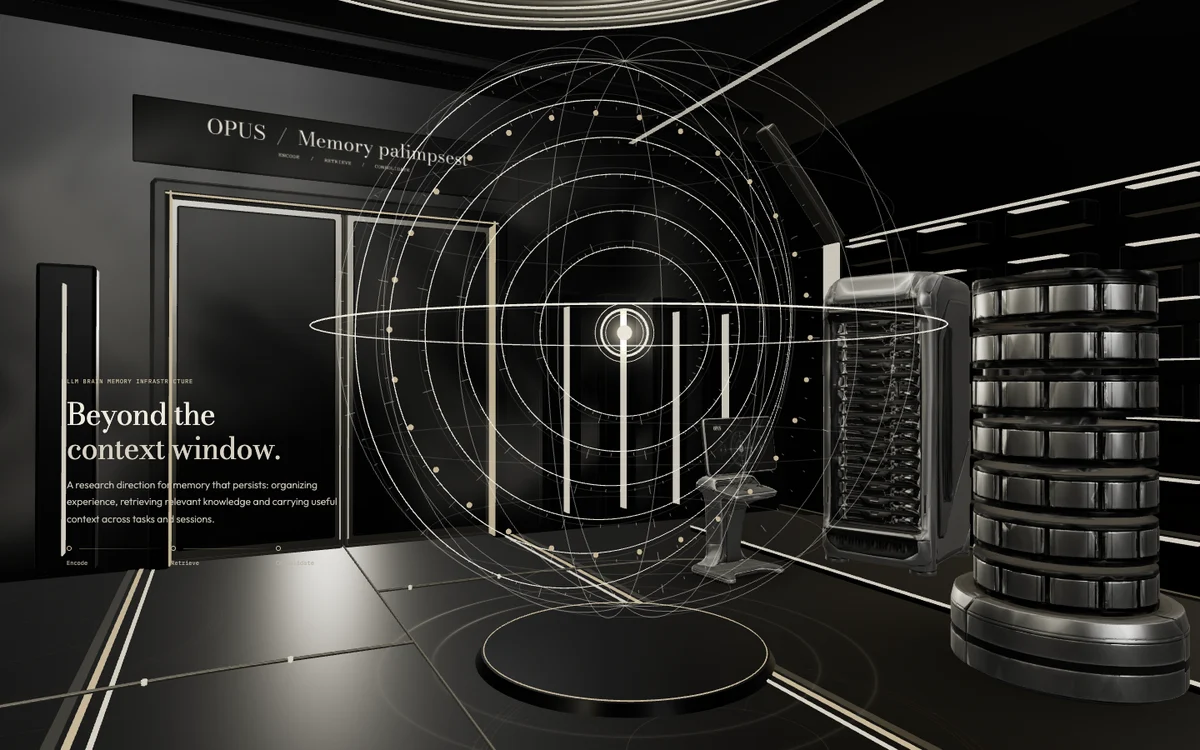
02 / The palimpsest
Context becomes structure. The archive represents information that can be retained, revisited and revised.
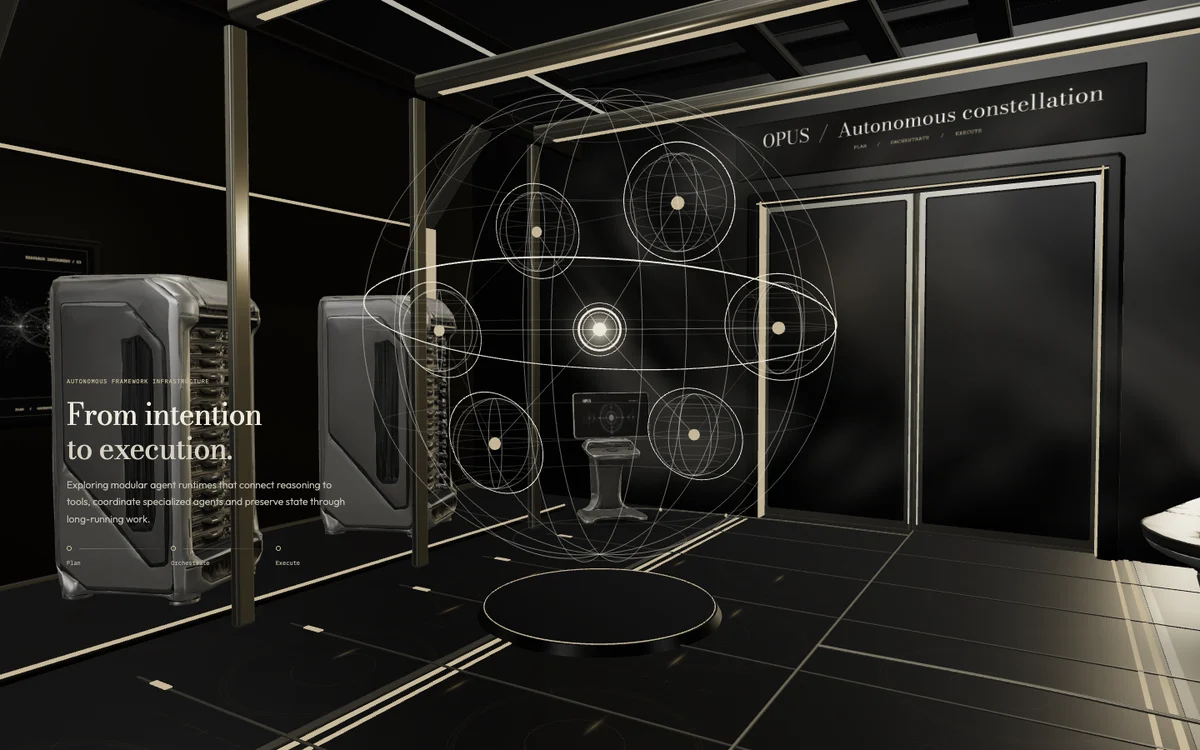
03 / The constellation
Intent becomes action. The workcell represents planning, tool use and coordinated execution.
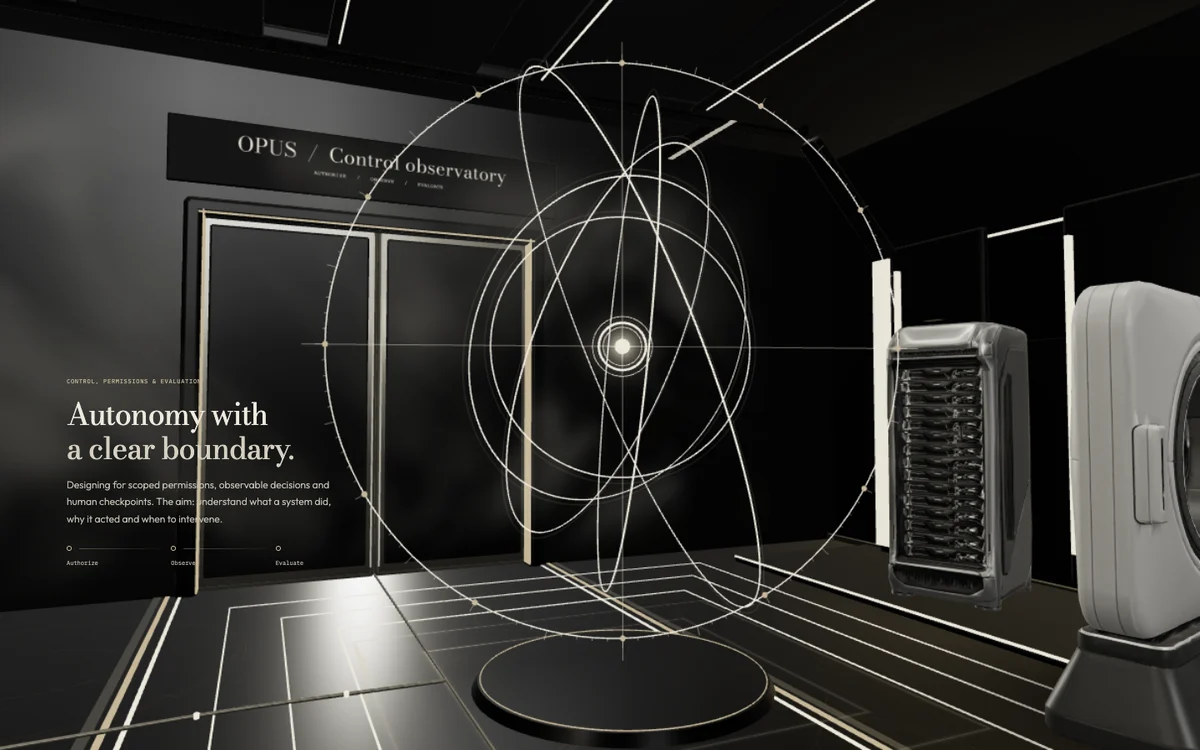
04 / The observatory
Capability needs boundaries. The instrument represents permissions, evaluation and observable behavior.
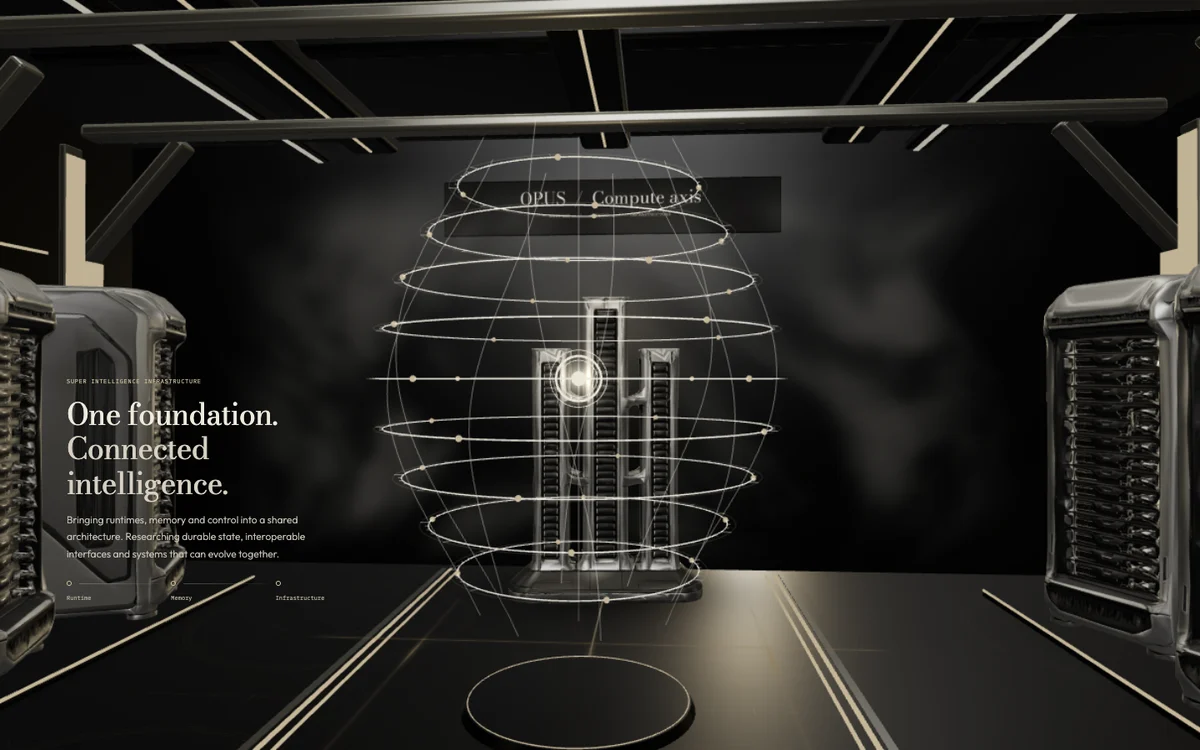
05 / The compute axis
The layers come together. Connected compute gives the journey its underlying architecture.